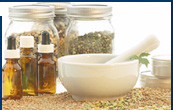
| Before there was penicillin, before there were CAT scans and before there was Viagra, there were herbs. The medicinal history of every civilization in every part of the globe owes a debt to these powerful, but often overlooked natural wonders. Today, about 80% of the worlds population uses herbs as their only source of health care. Yet here in North America, they wallow in the fringes, their full potential untapped.
Herbs contain many of the nutrients that we are deprived of in our modern life. Often we try and replace them with processed pills and treatments. While effective, these remedies can be confusing, costly and ridden with side effects. Often herbs can be just as powerful, but far milder, and have millennia of results as proof of their merit.
While herbs are by no means a quick fix cure-all, their worth has stood the test of time. A testament to power of herbs is that they can also be dangerous if not used properly. You should always do a little research before embarking on a herb treatment. If you have any hesitations at all, please consult a registered naturopath or doctor.
The word “herbs” refers to any part of any plant used for flavoring or medicine. People have sought all kinds of medicinal help through herbs for thousands of years. Herbs have the advantage of being natural remedies. Unlike drugs, which come with all kinds of risks and side effects, herbs can realign the body’s defenses and help it heal itself. Herbs are generally safe and pose few, if any, side effects.
People who research and recommend herbs are called herbalists. Herbalists use the leaves, flowers, stems, berries, and roots of plants to prevent, relieve, and treat illness.
Herbal Medicine Systems
Today’s most popular herbal medicine systems are:
- Western
- European
- Native
- Chinese
- Ayurvedic
The differences in these systems lie mainly in terminology and types of herbs used. For example, Western herbal medicine considers how herbs act upon specific body parts and systems, while Chinese herbal medicine considers how herbs act upon chi (a Chinese term that loosely translates into “life force”). Ayurvedic medicine (based on the ancient scientific tradition from India, older than any other recorded body of human knowledge) believes that herbs can help the body live in harmony with the external universe. All of the systems, however, treat the body as a whole system—that is, rather than target one specific area, they believe in achieving a holistic healing effect throughout the body. In general, herbs are used for energy, for maintaining the body’s natural immune system and for preventing and treating ailments and disease.
What do herbs do?
Specific functions of herbs, according to the Western (American) system, include:
- Cleansing the body
- Regulating and toning the glands
- Providing the body with vitamins and minerals
- Boosting energy levels
- Promoting “good” bacteria in the body
Herbs convert substances from the earth into vitamins, minerals, carbohydrates, proteins, and fats that our bodies use for nourishment and healing. Most herbs contain several active substances, one of which is primarily responsible for that herb’s healing benefits. Usually, though, the herb contains many ingredients that bring “secondary” benefits or treat other conditions in the body as well.
Classifying herbs
There are many ways to classify herbs. One popular way in Western herbal traditions is to classify them according to the type of active ingredient they contain:
- Aromatic (volatile oils)
- Astringent (tannins)
- Bitter (phenol compounds, saponins and alkaloids)
- Mucilaginous (polysaccharides)
- Nutritive (food stuffs)
This category system is useful when needing to substitute one herb for another.
Some herbal systems also perceive herbs to have varying combinations of the qualities heating or cooling and drying or moistening. Heating herbs are believed to produce warmth in the body. This category includes all aromatic herbs and many of the bitter herbs. Cooling herbs, on the other hand, are believed to take heat away from some part of the body. This category includes herbs that contain highly volatile oils. Drying herbs are astringent or diuretic herbs. Usually, aromatic herbs fall into this category. Meanwhile, mucilaginous herbs are considered moistening.
Regulation of herbs
Traditional herbology uses empirical observation, rather than laboratory analysis, to investigate healing methods and herbs. In European herbal medicine, herbs are checked by the German Commission E, a team of scientists, physicians, pharmacists and toxologists who check the medical benefits of herbs and watch out for drug interatctions. The United States Food and Drug Administration (FDA), which licenses all substances thought to be medically benefticial for use in the United States, does not recognize or accept findings from other countries. Since much more research is carried out on herbs in China and Europe than in the U.S., many herbs do not get FDA approval in spite of their safety and benefits.
Herbs in conventional medicine
Herbal medicine has a long tradition. Many familiar medications of the twentieth century were developed from ancient healing traditions that treated health problems with specific plants. Rather than using a whole plant, however, pharmacologists extract and combine individual components to capture its active properties. This process is problematic, as it potentially eliminates any or all of the minerals, vitamins, volatile oils, glycosides, alkaloids, bioflavanoids, and other substances that contribute to the medicinal properties of a particular herb. Most of the research that is done on plants and herbs continues to focus on isolating active ingredients, rather than studying the medicinal properties of entire plants. Herbalists, however, consider that the interaction of all its ingredients is responsible for the healing powers of a given plant.
Herb forms
Herbs come in a variety of forms:
- Fresh root
- Dried root
- Tablets—contain ground or powdered form of the raw herb; less potent than tinctures.
- Capsules—contain ground or powdered form of the raw herb; less potent than tinctures.
- Tea—loose versions of herb ready for steeping, or ready-made tea bags containing herb.
- Tincture—contains active extracted ingredients of the herb dissolved in alcohol.
- Bath
- Compress
- Ointment
- Lozenges—herbal based, naturally sweetened candies.
Growing herbs
Herbs can be wild-grown or organically grown. Wild-grown herbs grow in their natural habitat without human interference. However, no guarantee exists that such herbs have not been exposed to pesticides or other pollutants. Organically grown herbs, meanwhile, grow on farms under the careful supervision of highly knowledgeable farmers.
Herb administration
In general, herbs, when taken in recommended doses, tend not to produce adverse reactions. Severe side effects usually occur only when very large doses of the herb are taken and/or when the herb is taken for too long a time. Many herbs work best when two to three week pauses are made during treatment. Others should be given only during specific periods, such as during times of illness.
Herb fraud
Some herbalists recommend using the fresh root forms of herbs, when available, to avoid “fake” herbal products. Cases have been reported of herbal preparations that contain no actual active ingredient. Buying a standardized product when purchasing tinctures, capsule, or tablets may reduce the possibility of this occurrence. Look for products that are clearly labeled with the ingredients contained and amounts. |